James Hardie Siding, Installed Across Middle Tennessee
AmeriSide Exteriors installs James Hardie fiber cement siding for homeowners throughout Middle Tennessee and Southern Kentucky. Get the premium, low-maintenance look of painted wood with the durability of fiber cement, put on to manufacturer spec by a local, family-run team.
Your Local James Hardie Siding Installer
James Hardie is the name most homeowners picture when they want siding that looks like crisply painted wood but lasts for decades. AmeriSide Exteriors is a local installer of James Hardie fiber cement, not the manufacturer, which means our job is to translate a world-class product into a world-class result on your specific home.
Fiber cement is heavier and more demanding to install than vinyl, and that is precisely where a careful, experienced crew earns its keep. The flashing, the gapping, the fastening, and the finish details decide whether your Hardie siding performs like it should and whether the manufacturer warranty stays valid. We install it the way James Hardie specifies, every time.
Ron, our owner, personally walks every estimate, so you get straight answers about profiles, colors, and budget, with clear written pricing and no high-pressure sales push.
Why Fiber Cement Outlasts Wood and Reads Richer Than Vinyl
James Hardie siding is fiber cement, an engineered blend of portland cement, sand, and cellulose fiber. That recipe gives it a combination of traits no single traditional material offers at once. It is non-combustible, so it will not fuel a fire the way wood can. It does not rot, swell, or give termites anything to eat. And it carries a deep, dimensional profile that looks like true painted wood from the curb, without the endless scraping and repainting wood demands.
The result is a home exterior that holds up to Middle Tennessee heat, humidity, and storm season while staying handsome for the long haul. If you are still weighing materials, our full guide to vinyl, fiber cement, and composite siding lines the options up side by side so the decision is easy to make.
James Hardie Profiles We Install
James Hardie is a full system, not a single board. Here are the pieces we use most, and how they come together on a real home.
HardiePlank Lap Siding
The classic horizontal lap profile and the most popular Hardie product in the country. It delivers the timeless painted-wood look that suits everything from a historic home to new construction, with the clean shadow lines that give a facade real depth. It is the workhorse of most of our Hardie projects.
HardiePanel Vertical and Board-and-Batten
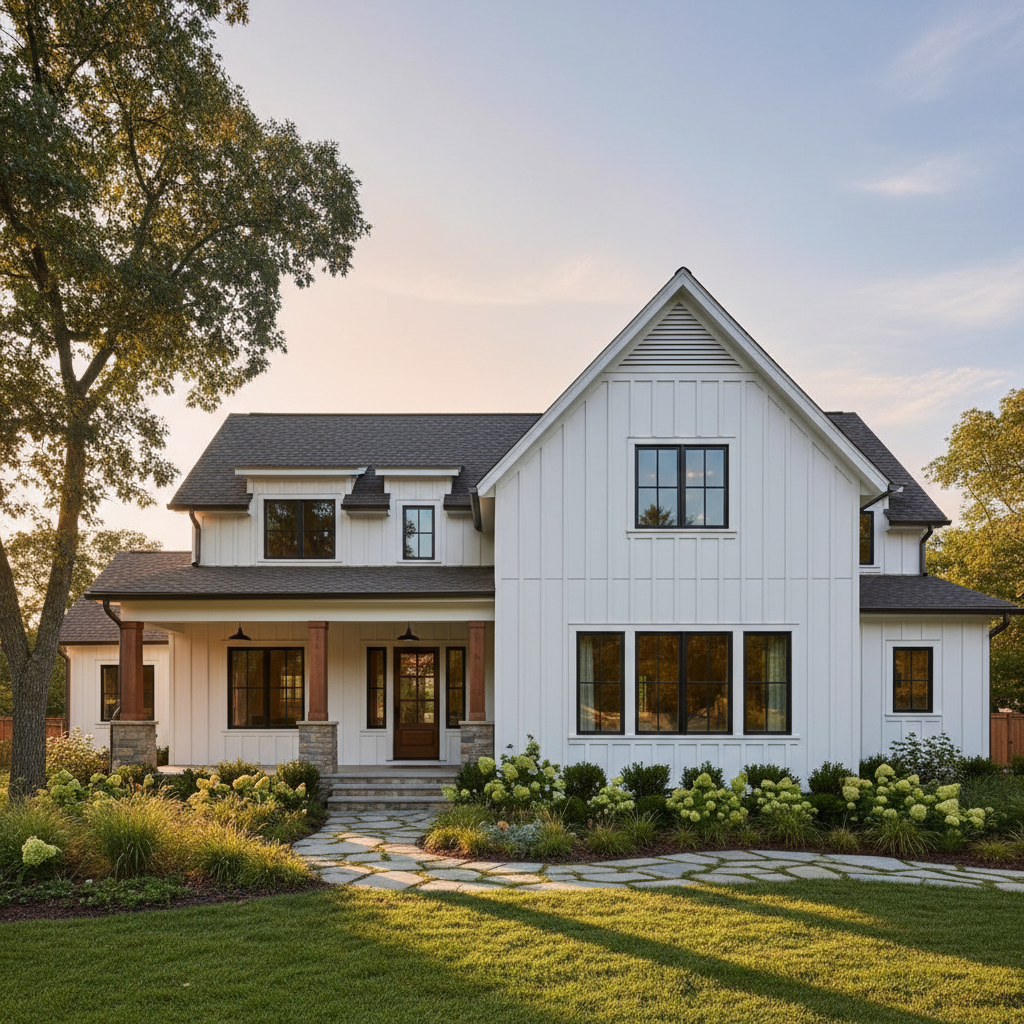
Vertical panels, often finished with battens, that create the modern farmhouse look so many homeowners want right now. Used in gables, on accent walls, or across a whole facade, HardiePanel adds vertical rhythm and architectural interest that sets a home apart from its neighbors.
HardieShingle Siding
Shingle-look panels that bring a cottage, craftsman, or coastal character to gables, dormers, and feature areas. They deliver the charm of cedar shake without the maintenance, splitting, or pest worries that come with real wood shingles.
HardieTrim and HardieSoffit
The finishing system. HardieTrim boards frame windows, doors, and corners with the same durability as the siding, while HardieSoffit closes out the eaves. Using the matched trim and soffit is what makes a Hardie job look complete and cohesive rather than half-finished.
ColorPlus Technology That Stays Sharp
Color is where James Hardie really separates from field-painted siding. ColorPlus Technology is a factory-applied, baked-on finish cured onto the board under controlled conditions, which resists fading, chipping, and peeling far better than paint brushed on at the job site. You choose from a curated palette of popular colors or go custom for a specific look, and the finish carries its own warranty.
For most homeowners that means years without repainting, which is a big part of the low-maintenance promise. You can browse the full color and profile range on the James Hardie website, then bring your favorites to the estimate so we can show you how they land on your home.
Why Homeowners Choose Us for Hardie
Your Hardie Siding Project, Step by Step
Hardie, Composite, or Vinyl?
James Hardie fiber cement is the right answer for many Middle Tennessee homes, but it is not the only premium path. If you want the richest dimension and built-in insulation with vinyl-level upkeep, it is worth comparing Hardie against Alside ASCEND composite cladding, our top composite line. Both are excellent, and they suit different priorities and budgets.
Whichever direction you lean, the honest comparison happens at the free, owner-led estimate, where we look at your actual home rather than a brochure. Many homeowners also fold in new replacement windows while the exterior is already being refreshed.
James Hardie Siding: Frequently Asked Questions
What is James Hardie siding actually made of?
James Hardie siding is fiber cement, a blend of portland cement, sand, and cellulose fiber. That composition is why it behaves so differently from vinyl or wood: it is non-combustible, it will not rot or feed termites, and it holds a painted finish beautifully. It is heavier and more labor-intensive to install than vinyl, which is exactly why it should be put on by a crew that installs it regularly.
Is James Hardie siding worth the extra cost over vinyl?
For a home you plan to keep, it very often is. James Hardie fiber cement costs more than vinyl up front and takes longer to install, but it resists fire, impact, moisture, and insects, holds its finish for years, and reads as a premium upgrade that lifts curb appeal and resale value. Vinyl remains the value leader for tighter budgets or rentals. We lay out the honest trade-offs on the in-home estimate so the choice fits your home and your plans.
What is ColorPlus Technology and will I ever have to repaint?
ColorPlus Technology is James Hardie’s factory-applied, baked-on color finish. Because the color is cured onto the board in a controlled plant rather than brushed on at the job site, it resists fading, chipping, and peeling far better than field paint and comes with its own finish warranty. Most homeowners go many years with no repainting at all, which is a large part of the low-maintenance appeal.
Does James Hardie fiber cement hold up to Middle Tennessee humidity and storms?
Yes, and it is engineered for exactly this. James Hardie builds its products for specific climate zones, and the boards specified for our region are designed to handle swings in heat, humidity, and moisture along with wind-driven rain and storm debris. Correct installation matters as much as the board, which is why we follow the manufacturer flashing, gapping, and fastening details so the system performs and the warranty stays intact.
What warranty comes with James Hardie siding?
James Hardie backs its fiber cement with a strong, long-term limited product warranty on the board itself and a separate limited finish warranty on ColorPlus Technology colors. Those manufacturer warranties only hold when the siding is installed to specification, so a correct install protects both the home and the coverage. We install to spec and stand behind our own workmanship on top of the manufacturer coverage.
Can you install HardiePlank lap and HardiePanel board-and-batten on the same home?
Absolutely, and mixing profiles is one of the best ways to add character. Many of our favorite results pair HardiePlank lap siding on the main walls with HardiePanel vertical board-and-batten in the gables or on an accent wall, finished with HardieTrim around windows and corners. We help you plan the combination so it looks intentional rather than busy.
Ready for James Hardie Siding?
Request your free, owner-led estimate and get honest pricing from a local Hardie installer.